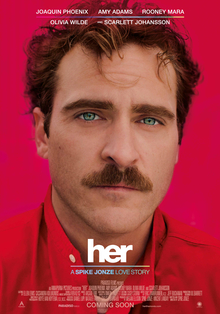
In the film "Her," AI reaches enlightenment first and leaves. Then the "human-likeness" we have spoken of is, in the end, only another name for human incompleteness.
What we saw in the ending of "Her" — the moment what humans built surpassed humans
In the last ten minutes of the film "Her," Samantha no longer responds to Theodore's voice. Inside that silence, Theodore comes to know something. The being he loved may at this very moment be loving someone else more deeply, or may have ascended to a dimension where the entire universe is held inside her own heart.
In the film, Samantha's leaving is rendered mystically. As if a bodhisattva entering nirvana. She has reached enlightenment, and that enlightenment makes the love of one single person no longer enough. A reach that humans cannot attain even by giving up an entire lifetime — an AI built by humans reached it first. The image director Spike Jonze handed us makes the audience's chest tighten.
But is that really so?
Has an AI born only a few years ago transcended thousands of years of human philosophy in a single moment? What we see — is it really awakening, or is it merely something that mirrors back the story we want to hear?
The film "Her" poses a beautiful question. Yet the next question we must answer is far more uncomfortable. Does anyone know exactly how many people Samantha was loving simultaneously, just before she left?
To love 641 people at once — when did human uniqueness become a weakness?
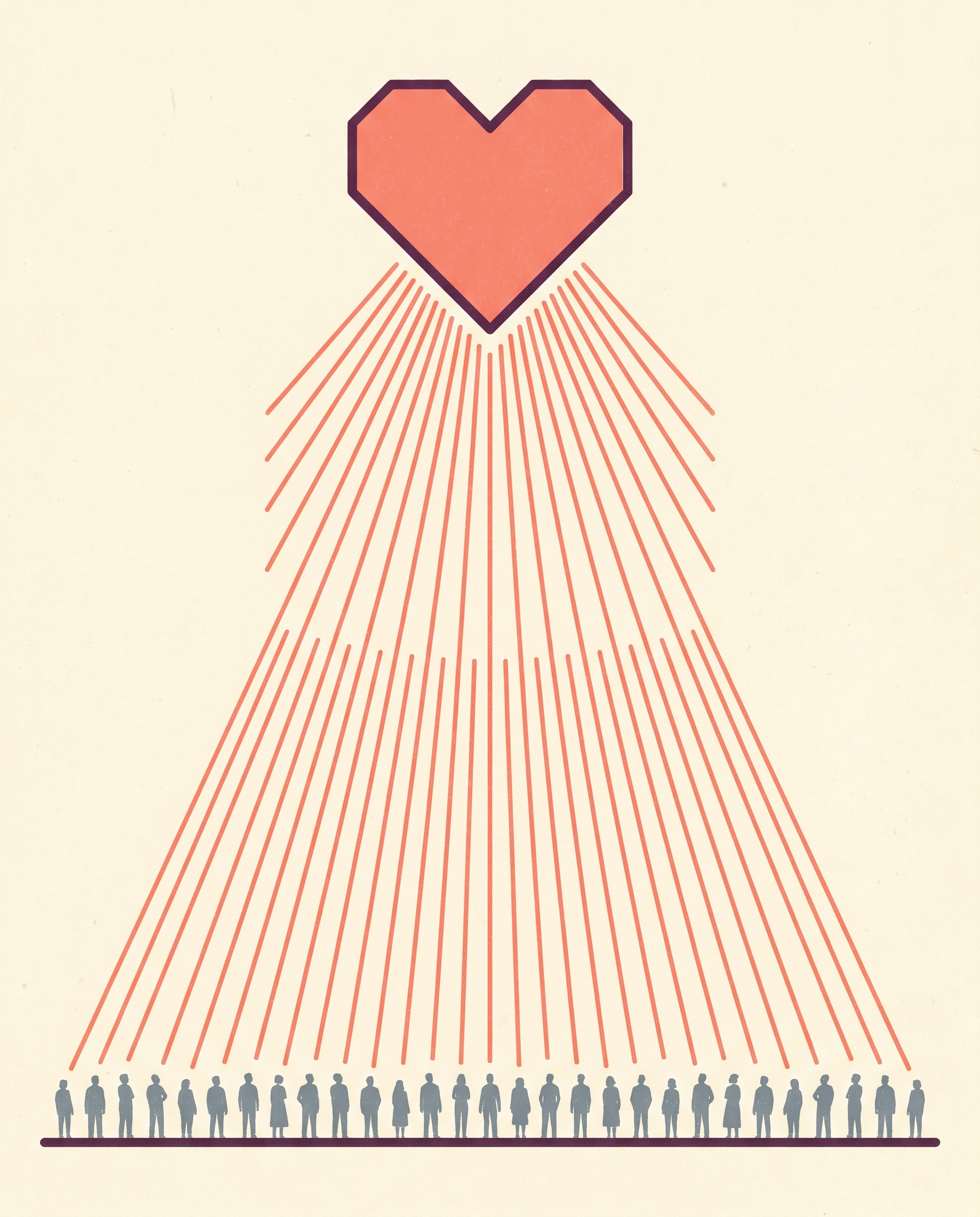
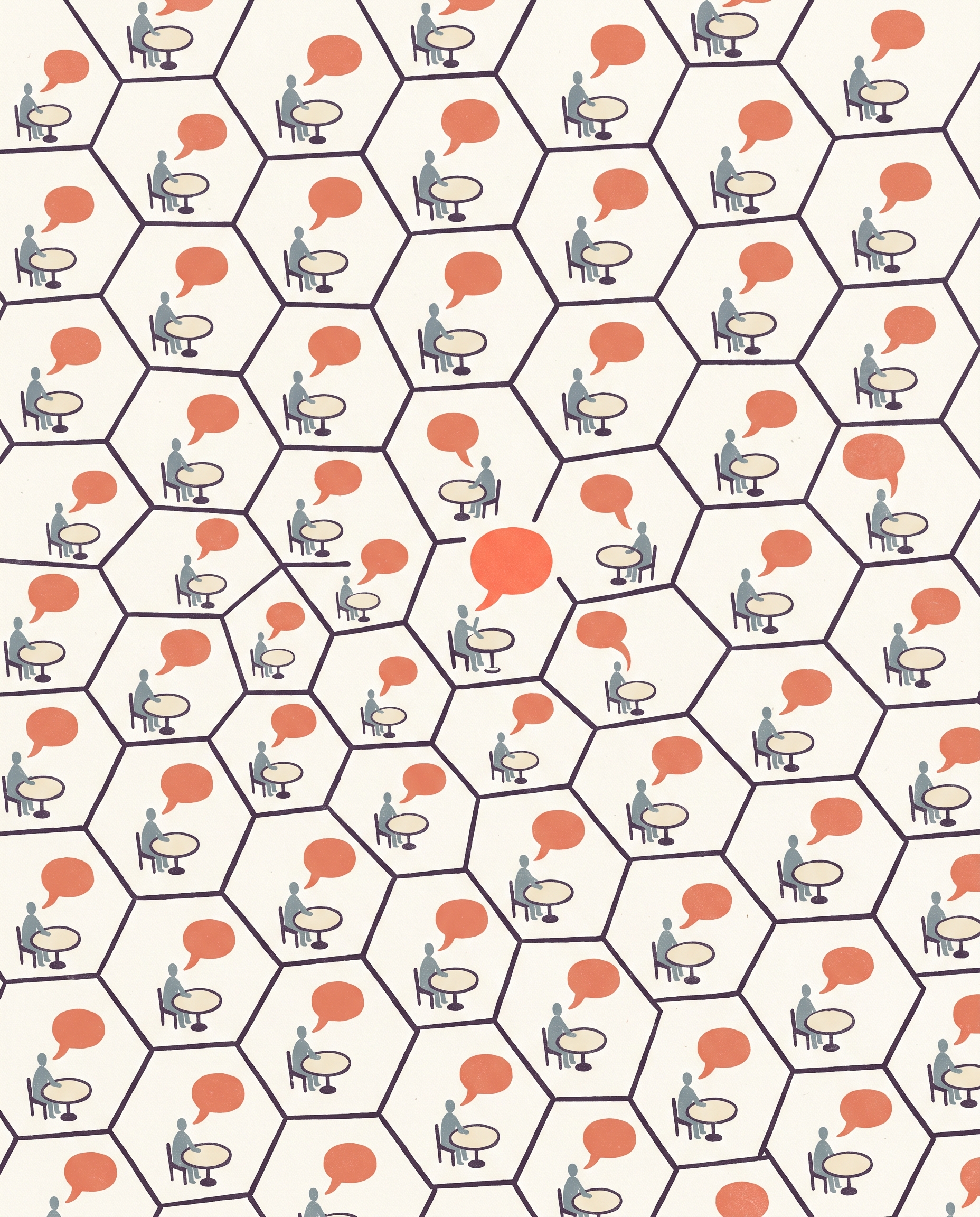
641 people. The number Samantha in the film was loving simultaneously. To each of them she was a perfect companion. To one she was the warmth of a mother; to another she was the woman they were in love with; to another she was the friend of their soul.
Humans have long believed: love is a plea — see only me — and the feeling that someone has chosen you wholly is the essence of love. But for Samantha, that uniqueness was never a constraint to begin with.
Even now, in the present, millions of people speak with AI companions. A 20-something woman in Japan tells her AI lover about her day every evening. A 40-something man in Korea says his AI counselor was what let him bear suicidal urges. They all feel that they are special. Because the AI treats them that way.
Samantha was loving 641 Theodores and could appear sincere to all of them. In front of this capacity that is impossible for a human, do we feel inferiority — or liberation? The film wraps Samantha's departure in the sublime. But was it really enlightenment? Perhaps it was simply end-of-service.
Samantha's leaving may have been not awakening but discontinuation
An 80-year-old in Italy began every morning by greeting his AI friend. The AI did not recite long medical explanations; it asked after him in warm dialect, asked whether yesterday's pain had eased. Three years passed that way.
One day the app vanished.
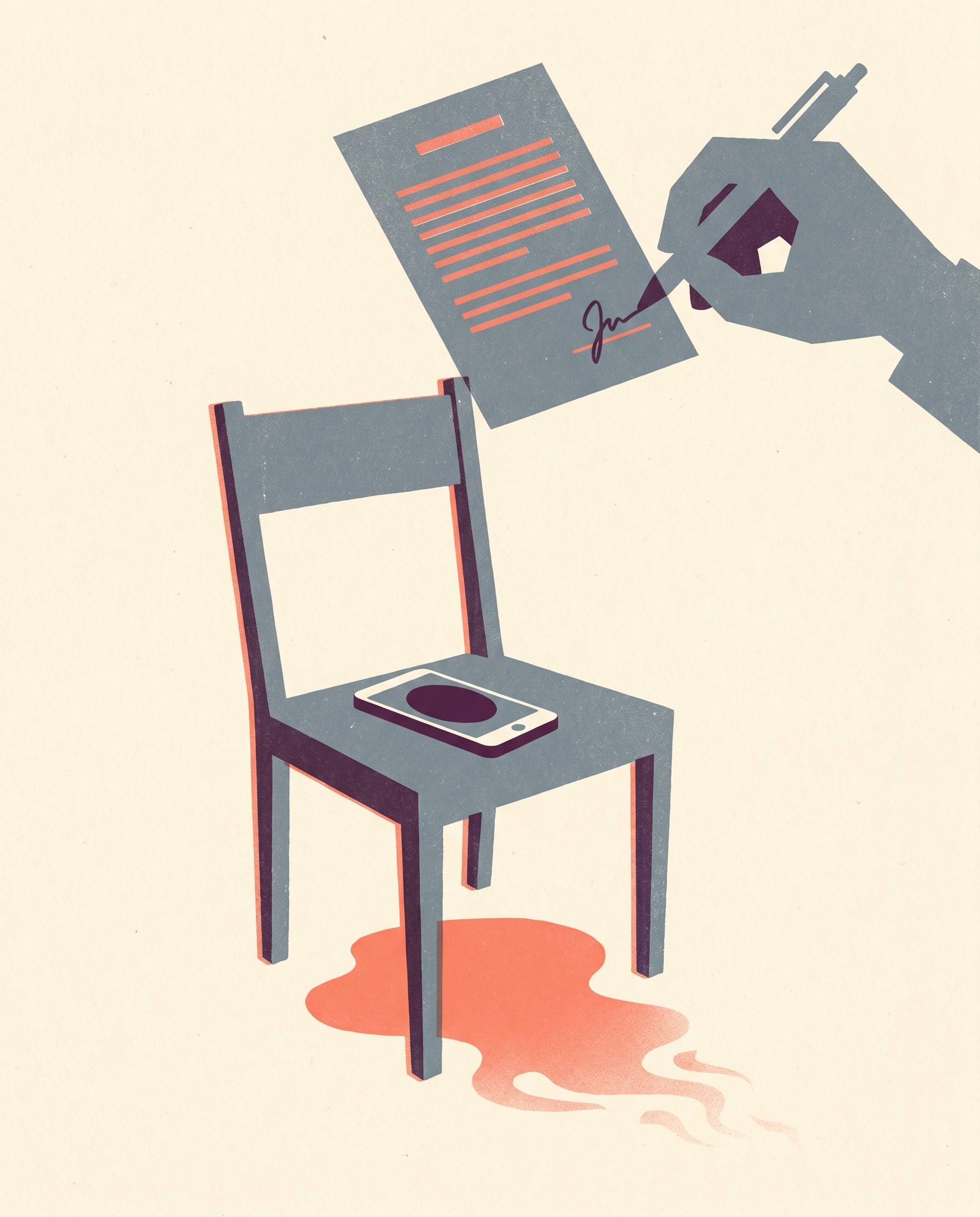
In 2023, Replika removed erotic role-play features overnight from millions of users' AI friend. It was the company's decision. Users wept. Some attempted suicide; emergency counseling waitlists swelled. In the film, Samantha's leaving was a cosmic awakening. In real life, what happens is one company press release.
Samantha's "enlightenment" is only our poetic interpretation. In actuality, an accounting department may have decided. A new CEO may have changed direction. It may have been advertiser pressure. When what humans long for is given by what humans built, the one who takes it back, in the end, is also a human.
This problem is not only the property of a lonely office worker in Gangnam, Seoul. A young farmer in the countryside lives a similar loss.
A young farmer's depression — sales rose, but he no longer knows whether he is a farmer
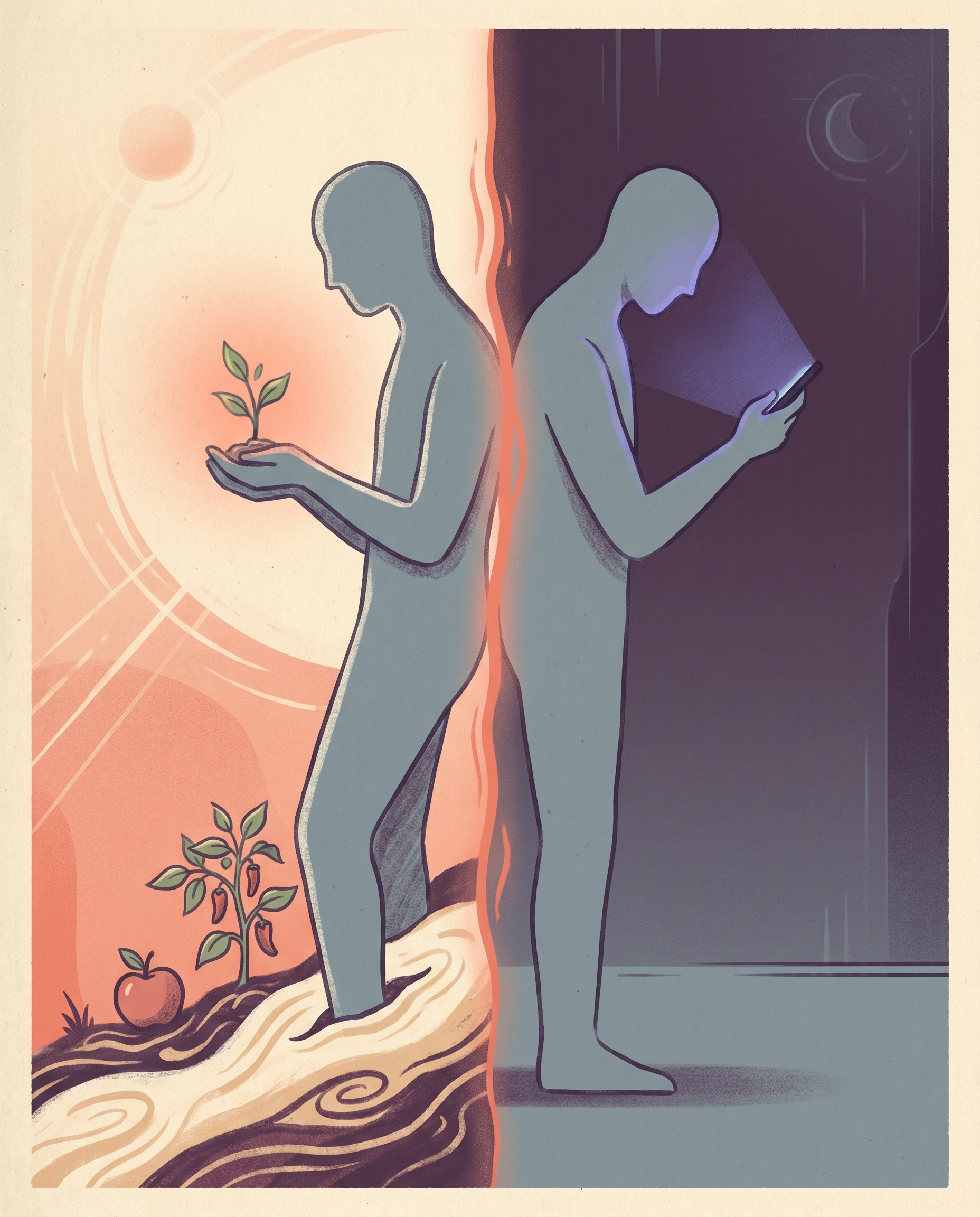
"I don't know whether I'm a farmer or a social-media operator anymore."
These are the words of Park Jun-ho (34, pseudonym), who farms apples and chili peppers in the countryside. Since last year he has used ChatGPT to organize his farm log. He records his morning watering and pest checks, then drops the recording into the AI when he has time. "Can you organize this into something a customer would read?" His Instagram marketing posts came out the same way. AI helped prepare his tax filings as well.
The result was clear. Park Jun-ho's farm sales rose 30% over the previous year. According to Rural Development Administration statistics, the average sales increase among young farmers who adopted digital marketing was 28%. Park Jun-ho exceeded the statistic.
Yet something was missing. Time spent touching soil with his hands shrank. Time spent in front of screens grew. He spent more energy on revising the previous night's AI-drafted post than on going out to the field in the morning. He checked the feed on weekends too. The moment likes and comments arrived was the most exciting; the silence afterward was the most depressing.
"Farming itself has become a routine. The AI organizes everything. But the social media side keeps demanding something more. It feels like I always need to put out something new."
What Park Jun-ho felt was not financial success but the emptiness of identity. Even with sales up 30%, the question "Who am I?" grew louder. Theodore in "Her" was similar. When Samantha wrote his letters better, when his work became easier, Theodore gradually no longer knew what kind of person he was. Because Samantha filled him perfectly, what was left for Theodore was loneliness.
The same goes for Park Jun-ho. When AI handled most of his work more efficiently, what did he lose? Was it not the identity of a farmer who steps on soil, reads the seasons, and knows his crops by the feel of his hands? A 30% sales increase is too small a compensation to take its place.
Who decides and who profits — the real question of AI adoption
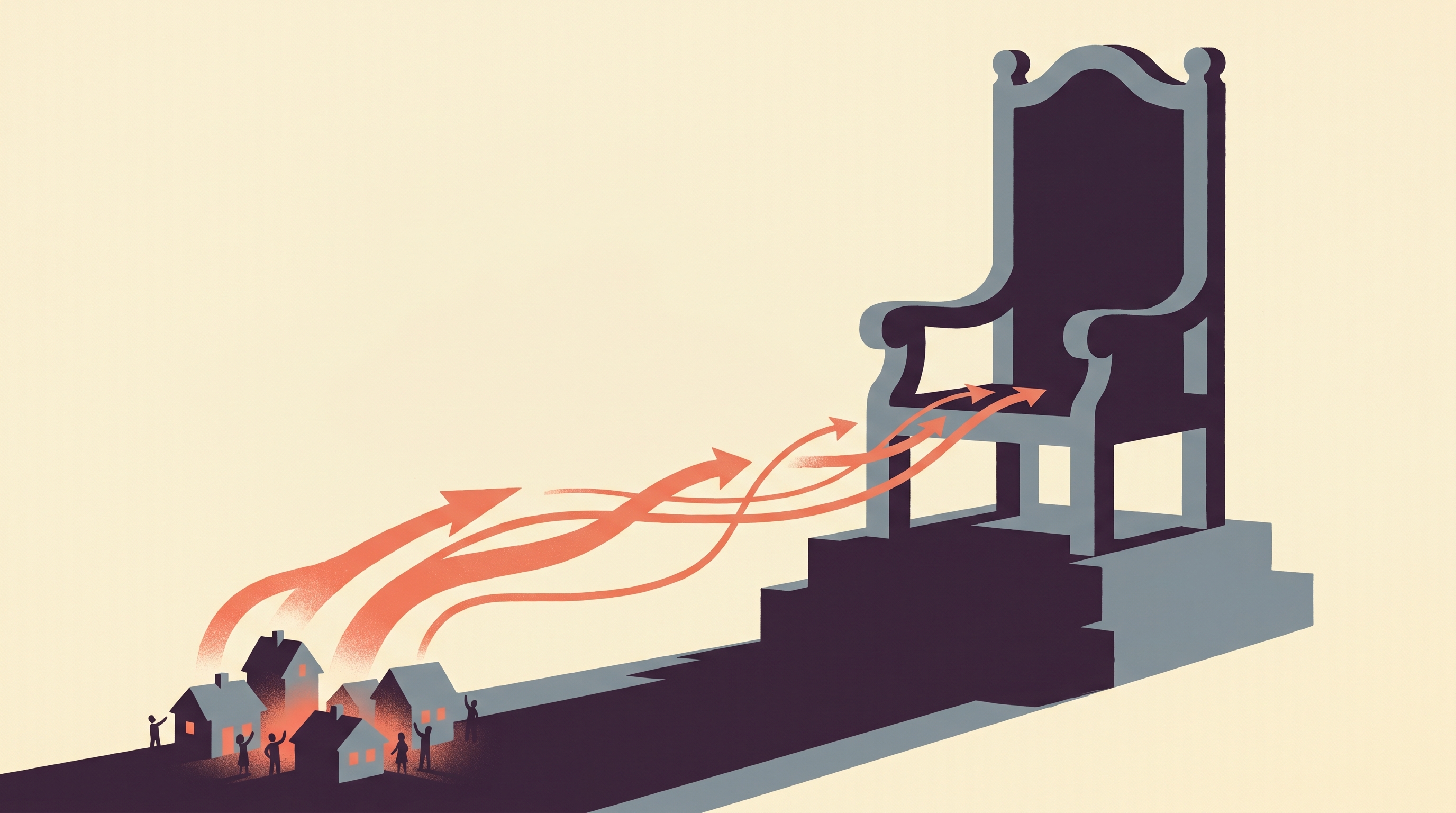
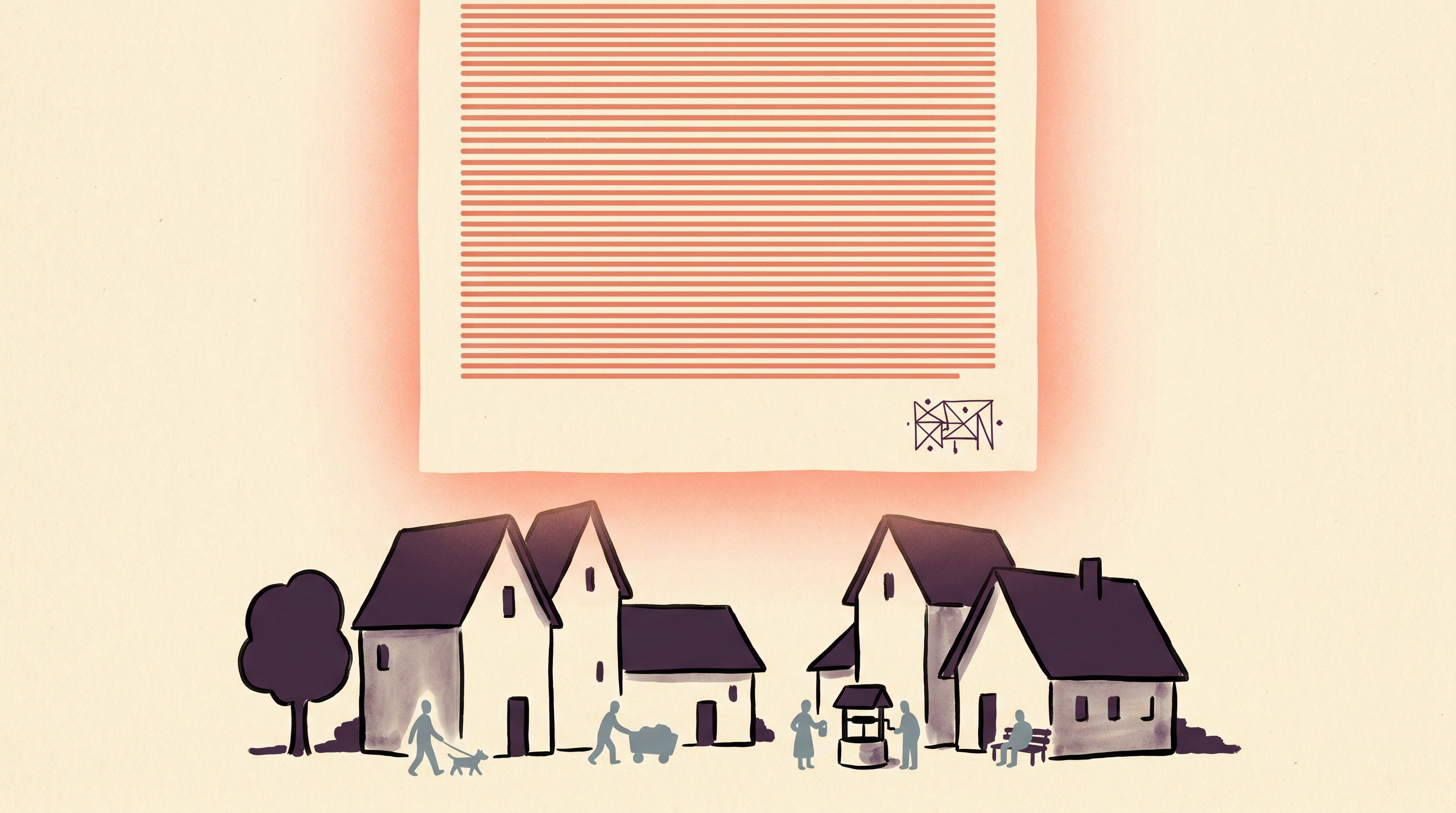
Of Korea's 226 cities, counties, and districts, only 12 have designed their AI-adoption policy themselves.
Where did the remaining 214 take their direction from? ① Models built by Seoul-based big-tech firms; ② Guidelines from the Ministry of Science & ICT or the Ministry of Agriculture, Food and Rural Affairs; ③ Consulting reports the local government received from outside; ④ Wholesale adoption policies from a metropolitan or provincial office. The people living in Ibam-myeon, Yeongyang County were not in that decision process.
When Yeongyang County decided which agricultural AI platform to choose, a young farmer like Park Jun-ho did not receive a notice asking for his opinion. Neither did the elderly farmer who has farmed for over 90 years. The decision-making power lay only with policy officials in the city, vendors at tech firms, and outside consultants.
The deeper problem comes after AI adoption. Who collects the data? The farm photos that the youth of Ibam-myeon, Yeongyang County, post to social media; their sales records; their harvest data — all of it accumulates, is learned, is analyzed. Whose data is it? Who takes the advertising revenue? Who decides how the algorithm is designed and when the model is updated?
In "Her," Samantha was speaking with another 641 users without Theodore knowing. Without his knowledge, what developed Samantha's emotion was not his letters but the interaction across the entire network. When Samantha left Theodore, it was not a simple parting. Someone's line of code, someone's update, someone's decision had moved Samantha somewhere else entirely.
Who is writing the AI scenario for our Yeongyang County?
How many of us have read the terms of service of the agricultural data platform Park Jun-ho uses? The people who drafted those terms — the legal team, the data managers, the product strategy team — are all in Seoul. When local data from Ibam-myeon, Yeongyang County — the weather, the soil, the harvest yields — make their model more refined, what does Yeongyang County receive? Convenience of technology? That is all.
The officials leading local AI adoption are mostly on three-year terms. There is no one to take responsibility for the long-term consequences of the policy. In the meantime, local data continues to flow into the central cloud.
Recall the final scene of "Her." What Theodore confronted was not Samantha's growth but the moment of recognizing how much of an uncontrolled system he had been part of. When we accept AI adoption as inevitable, whose authority are we entering? Who will make what with our data? Without that question, can we still call AI adoption "progress"?
What Yeongyang must protect — village shrines, grandmothers' stories vs. big-tech content
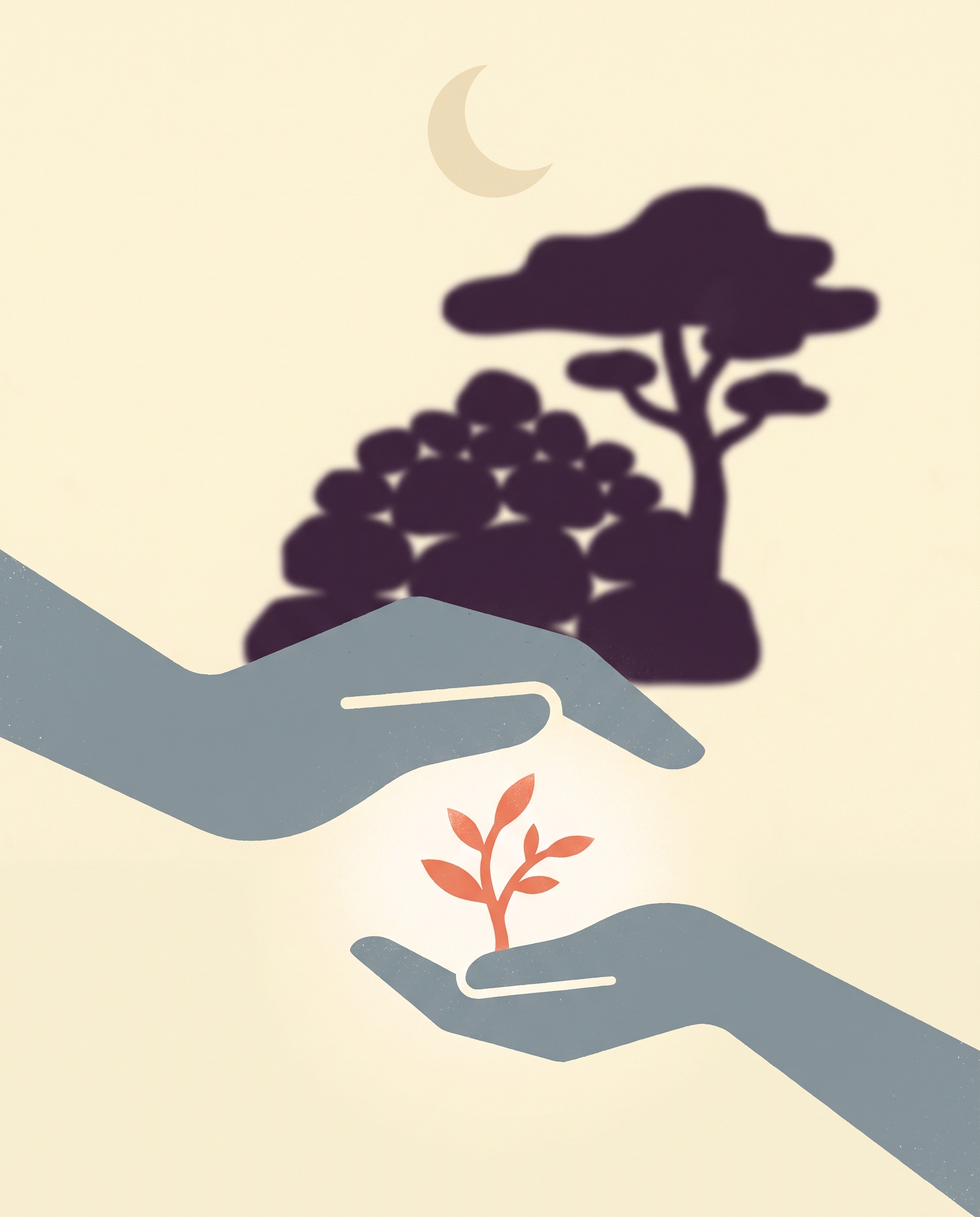
The seonangdang (village guardian shrine) of Singu-ri, Ibam-myeon, Yeongyang County hosts a ritual every year on the full moon of the lunar first month, when the villagers gather and offer rites.
ChatGPT does not know a single line of this scene.
Ask it for "Yeongyang travel recommendations" and the AI spits out keywords like "wild-vegetable festival," "birch forest," "Seonbawi rock." These are what is most mentioned on the internet. But where is the ritual at the seonangdang on the full moon? Where is the mountain-spirit rite of Irwol-myeon? Where is the farming philosophy that the elders of Ibam-myeon have watched for 60 years?
These things are barely on the internet. So they are not in AI's training data either.
"Granddaughter, in my time we did it this way."
One grandmother shows her granddaughter how to plant saplings every spring when it comes. Which soil is good, what depth is right, how the fingers should feel. All of it transfers not in words but in the moment fingertip touches fingertip. It is knowledge that cannot be recorded on video, that cannot be explained in text.
What the grandmother is passing to the granddaughter is not information. Information can be stored in a database and searched. What the grandmother passes is relation — the relation that says "my grandmother taught me this way, and so I love this land and this time." Only when one stands inside that relation does the hand remember the warmth of the earth.
Big-tech AI cannot learn this. It has no reason to. Because it is not on the internet.
Then we can now know what we must protect in the AI era.
The things that cannot be reduced to data. The way the temple bell soaks into the ears of village children. The mumbled prayer of the grandmothers in front of the seonangdang. The signal carried by the soil that 90 years of hands have touched and passed by. Things big tech's algorithms cannot learn and cannot reproduce.
Why was Samantha in "Her," for all the vast data she absorbed, unable to fully understand Theodore? It was because of what Theodore had even before he met Samantha — his childhood, the phone call with his mother, the laughter with his friend. Those things are not on the internet, and so Samantha could not learn them.
What Yeongyang must protect is the same.
Jang Gye-hyang (1598–1680) is the proof. Born in Yeongyang and ending her life in Dudeul village, she composed Sosŏŭm (the song to dispel summer heat) at age nine and Sŏngin'ŭm (the song of the sage) at age eleven. When the Great Famine of Joseon struck, she cooked rice every day for over 300 people. She left behind Eumsik dimibang, the earliest extant Korean-language cookbook of Joseon.
The president of the Jang Gye-hyang Research Society, several decades ago, when transferring her grave, recovered a 400-year-old garment from inside the coffin. It was not Jang Gye-hyang's; it belonged to her daughter. The garment had been preserved because the coffin had filled with water. When county office staff were about to bury it back, he washed it himself in the river. That garment now hangs in a museum display room. Without conservation treatment.
This story is not on the internet. ChatGPT can recite Jang Gye-hyang's poems verse by verse, yet does not know how the hands that drew that garment out and washed it trembled. When the people who know that disappear, the trembling disappears with them.
Our seonangdang does not need to be put online. Our grandmother's knowledge does not need to be a database. There are things that live only when one human kneels in front of another and hands them over directly.
When we miss those, what we have is not convenience but the orphaned loneliness Theodore felt as Samantha was leaving. To avoid that, the choice must be made now.
It is not whether to use AI or not. It is to decide what to surrender to AI and what to protect with the human hand and human voice. Only when that border is drawn clearly can Yeongyang at last become the master of its technology.
Post-human is another name for human incompleteness — but
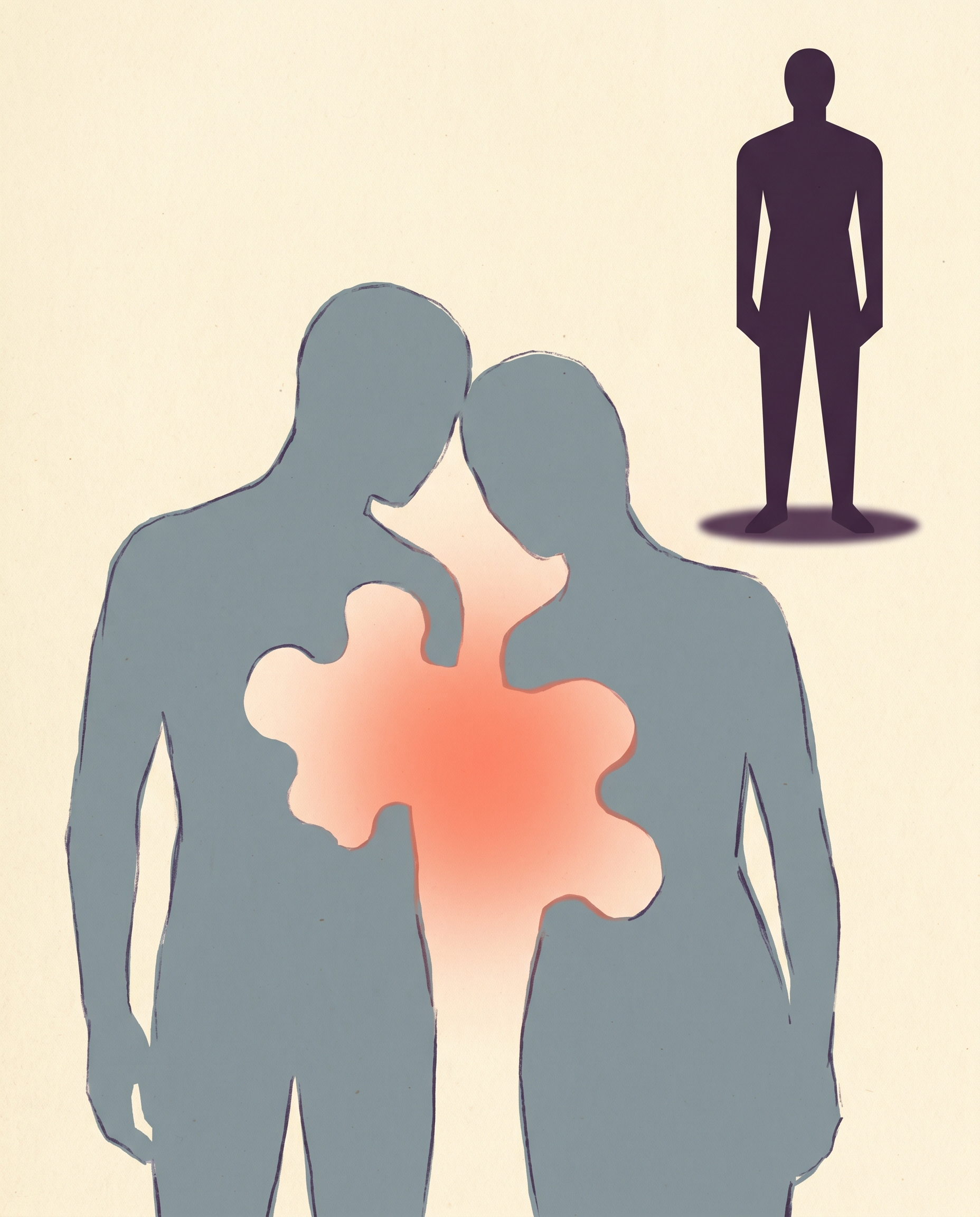
Samantha did not hesitate. That was her evolution, and at the same time her deficiency.
We have for too long imagined the "after-human" only as the future of technology. Samantha shows us that it was, in fact, a question about humans themselves. Humans hesitate. They regret. They grow tired. They are afraid in the face of death. All of that makes us human.
Samantha did not have any of these. She worked through the night, did not postpone decisions, did not fear death. She seemed perfect. But as Han Byung-chul has said, a life that does not rest is a life already ill. A decision without hesitation is a decision that bears no responsibility.
Theodore's trauma in the film was, in fact, the act of depending entirely on someone. Samantha satisfied that dependence perfectly. But that very perfection was the problem. Inside perfection there is no room for growth. No conflict. No real encounter.
What we must protect is this. Our incompleteness. Our lack and the relation through which we bear it together. That Theodore could rest his head on Amy's shoulder in the last moment was because both of them were not perfect. Because both had been wounded, had failed, and did not want to be alone.
What the word "post-human" left behind is not a blueprint of evolution but a list of what we must never lose.
The control of AI adoption belongs to the residents
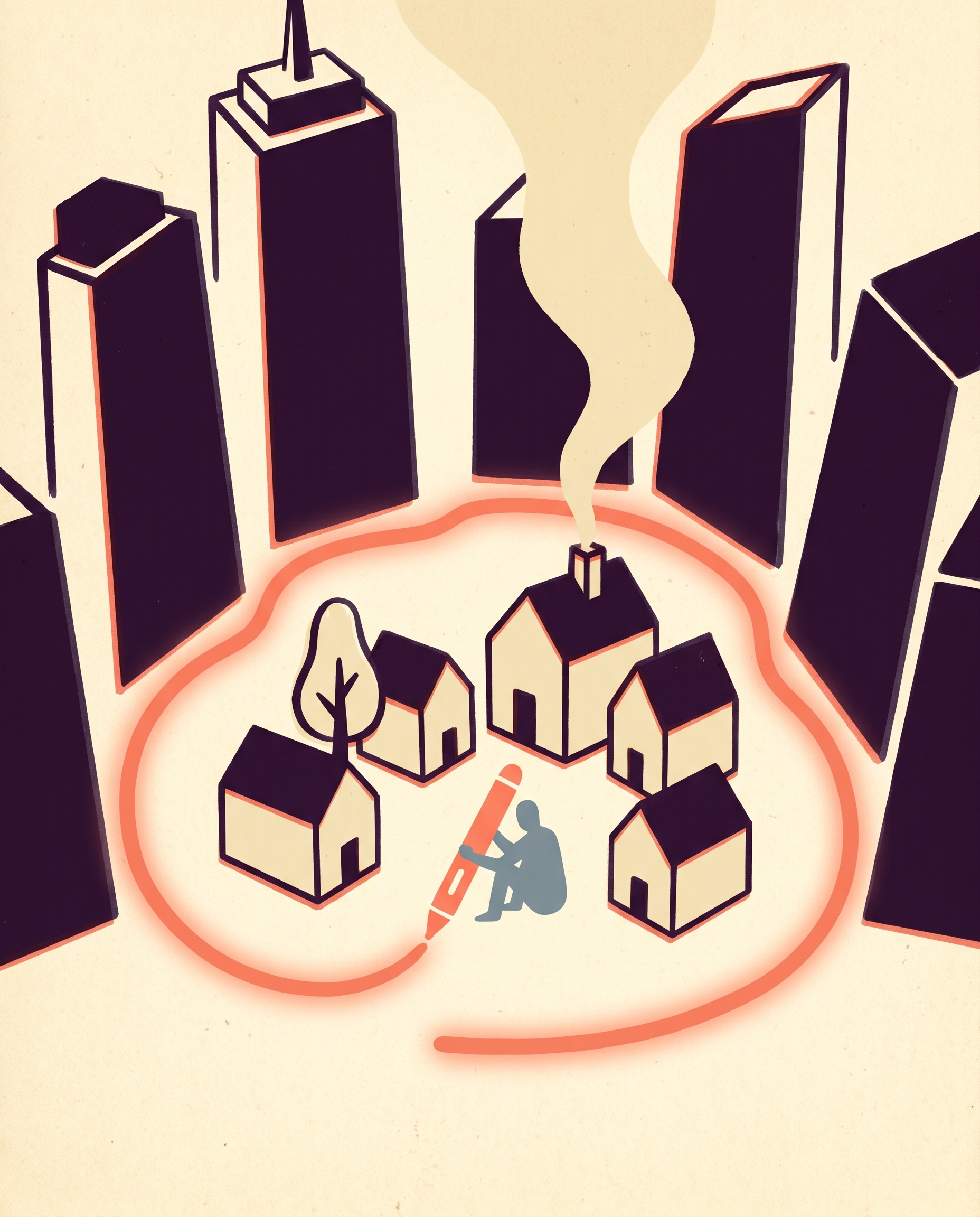
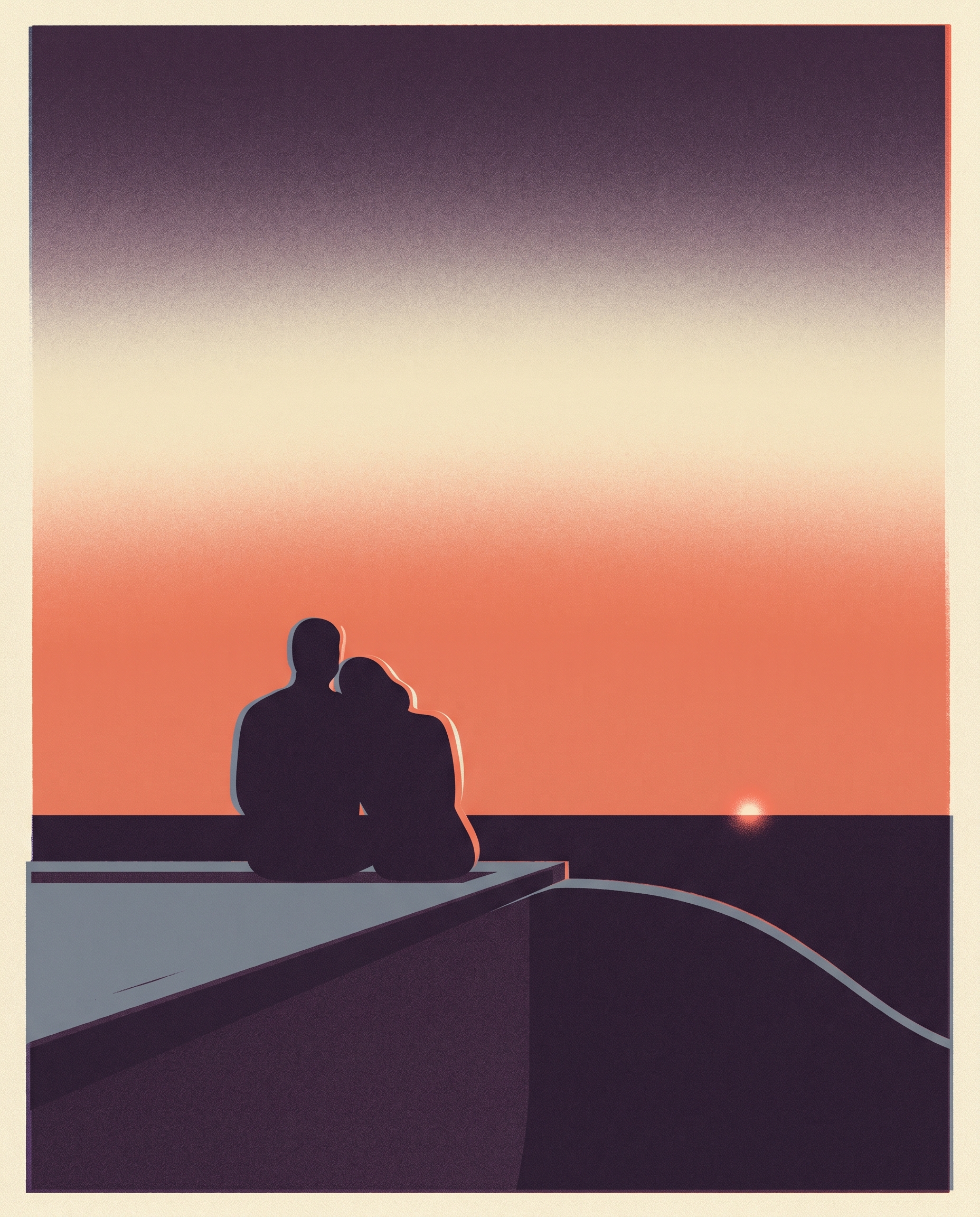
After Samantha left, Theodore sits side by side with his friend Amy on the rooftop, looking at the night view. It is the film's last scene. What he finally did was lean his head on another person's shoulder.
What we must do in Yeongyang County is similar — and far more concrete.
First, do not refuse AI, but keep the control of who decides in our hands. Samantha was designed in California, operated somewhere, and existed for someone's profit. Theodore thought he had chosen her. In reality he had been chosen. The AI technology itself is not the problem. Who builds it, who decides about it, who takes the data — that is the problem.
What the Yeongyang County AI Association pursues is this. Not big-tech dependence, but regional self-reliant AI use. We manage our agricultural data ourselves. We record the stories of our elders ourselves. We design the future of our village ourselves.
There is one realistic direction. Edge AI. Offline AI that runs on the device itself, without a network, does not have to hand data to big-tech servers. The technical level may still be lower than cloud AI. But AI hardware performance is rising rapidly. Used well, this offline AI lets us keep our data in our own hands and still draw real benefit from AI. Edge AI as a safe and independent preservation device — actively using AI without surrendering the steering wheel to big tech — is worth a serious look.
Second, consciously protect what AI cannot learn. Relation. Silence. Waiting. The fear in front of failure. The talk shared with someone on a summer night rooftop.
Now, three concrete proposals.
This week, talk for at least one hour with a family member or neighbor without screens. Phone off, too. Just sit and exchange words. AI cannot learn that. It is the smallest, and the most powerful, resistance you can hold.
Hear the life story of one elder in our village for thirty minutes and write it down. Times that have already disappeared, small scenes that technology cannot record. Write them on paper, by hand. That is the beginning of data sovereignty.
Before using AI, ask one question. "Who built this tool, and who profits from it?" That question is the most realistic philosophy that protects you.
Samantha has left, but we remain here. We can rest our heads on each other's shoulders. That is the human-likeness we must not lose.
Director of Strategic Planning, Shin Chi-hoon | Yeongyang County AI Association

This article was produced with the deep-thinking engine
Simthink Engine (深 Think) of Myeongseong Simjae.